



Hermitage des Artistes: A Renaissance of Tramp Art

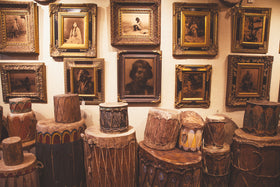
The Hermitage des Artistes, based in a modest house at 437 Sixth Avenue in Troy, New York, were a collective of five artisans—Michael Lavery, Andrew Stutter, Paul Cunningham, Ira Rogoff, and Jim Kennedy. All recovering alcoholics, these men have transformed their lives through the revival of tramp art, a rococo carving style rooted in post-Civil War America. Using discarded fruit crates, they craft intricate music boxes, picture frames, patriotic sculptures, and religious installations, turning society’s refuse into objects of beauty and hope.
Since the late 1980s, the group honed their craft in a communal home that doubled as a workshop, archive, and support system. Each artisan brought a unique background: Lavery, a former squatter with a lifelong passion for carving; Stutter, once a fire-extinguisher repairman; Cunningham, a teacher of homeless children; Rogoff, a health-care worker; and Kennedy, a rare book forager. Their shared struggle with addiction and commitment to sobriety bound them, with each notch carved symbolizing a step away from their past lives on the streets.
The Hermitage’s work has gained national recognition, with pieces displayed in the Smithsonian Institution, folk-art museums, and the Vatican Museum. Their art, made from reclaimed wood, reflects their own redemption, mirroring the historical tramp artists who transformed discarded materials into meaningful creations. Beyond their craft, the collective advocated for the Mohawk Indians, supported environmental causes, and welcomed troubled wanderers, making their Troy headquarters a hub of creativity and healing.
Their process was deliberate, producing 3,500 pieces annually from 6,000 fruit crates collected from supermarket dumpsters. These works, sold in galleries across the U.S., embody a spiritual and artistic covenant. For the Hermitage des Artistes, tramp art was more than a craft—it was a testament to resilience, community, and the transformative power of purposeful work.
View Cisco's collection of Tramp Art - Perfect for history enthusiasts and collectors of Americana.